
‘Health tourism’ for the body and mind

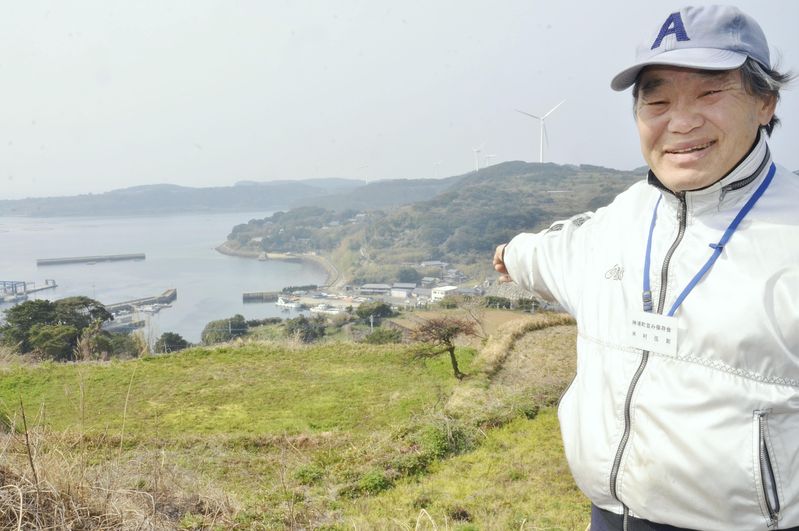
The Yomiuri Shimbun / Itsunori Yonemura on a hill in Azuchi-Oshima island

The Yomiuri Shimbun /
Itsunori Yonemura on a hill in Azuchi-Oshima island

The Yomiuri ShimbunNationwide efforts are on the rise to promote so-called health tourism, which takes a different approach to sightseeing by focusing on health. With many provincial regions facing declining populations and dwindling tourist numbers, organizers are competing to create unique plans that utilize each region’s resources and geographical features.

A pollen-free island retreat

By Yoshiko Minami

NAGASAKI—Azuchi-Oshima is a remote island off Hirado, Nagasaki Prefecture. Residents are inviting tourists to come to their “escape-from-pollen resort,” boasting of its very low quantity of cedar pollen in the air.

Cedar forests account for only about 1.6 percent of the island’s total acreage, and what cedar tree pollen there is tends to drift away from the island. Also, pollen from nearby areas does not reach the island. 

According to research by Nagasaki University in fiscal 2009, the percentage of islanders suffering from hay fever was about 2.6 percent, compared to the national average of about 26.5 percent. The figure is even lower than the 6 percent in Okinawa Prefecture, where there are no cedar forests.

About 10 islanders run the Hirado branch of Bunkazai Takumi Juku, a nonprofit organization for the preservation of cultural assets that is now organizing Oshima therapy tours.

A single tour accommodates up to 20 visitors, and costs ¥10,000 for a three-night, four-day package. Demand is high, with applications reaching three to four times the available spaces for each tour.

The tour includes a lecture by a doctor specializing in pollen allergies. Forty-three people from various regions, including Kansai and Tohoku, applied for this year’s tour from March 6 to 9.

Keiko Yokoyama, a 72-year-old participant from Kitakyushu, said, “Though I had been troubled by a runny nose, I’ve been able to stay on this island without wearing a mask. I was impressed. It’s also nice that the fee is low and the air feels cleaner than in Hokkaido and Okinawa Prefecture.”

Itsunori Yonemura, the 68-year-old deputy head of the NPO’s Hirado branch, said: “We want to make [the island] more famous as a get-away-from-pollen resort so as many people as possible will visit.”


Forest therapy

By Nana Ando

NAGANO—A nonprofit organization is promoting forest therapy, where tourists nourish their body and mind through physical exercises in forests in Iiyama, Nagano Prefecture.

The Tokyo-based Forest Therapy Society said there were 48 forest therapy bases across the nation as of the end of February. Iiyama was the first such lo-cation to be certified in the NPO’s inaugural inspection in April 2006.

A wide variety of experiences await in the city, including walking and yoga in the summer and trekking come winter time. About 1,500 people visit each year, mainly women in their 30s and 40s.

Located in a region with heavy snowfall, skiing used to be the city’s main tourist attraction in the winter, but the ski boom ended and tourist numbers have been falling year by year. However, the city government has expressed high expectations as forest therapy has been an effective draw in luring summertime tourists.

Fees change according to the seasons, but prices generally hover at about ¥15,000 for a two-day, one-night stay.

One of the more popular courses among middle-aged couples and women includes health checks in a city hospital, followed by nutritionally balanced, low-salt lunches.

“I hope visitors will take a second look at their everyday lifestyles by spending time in forests and using their five senses,” said Kenichi Takano, 37, manager of the Nabekura Kogen Mori no Ie accommodation facility.


Ancient pilgrimage

By Eiko Negishi

TSU—In January, the city government of Owase and other munici-palities in Mie Prefecture began organizing walking tours on Kumano Kodo, an ancient pilgrimage route that is part of the Sacred Sites and Pilgrimage Routes in the Kii Mountain Range, a World Heritage site.

Owase has been troubled by a declining population, prompting munici-palities to promote walking tours as a beneficial activity for good health and beauty.

The city government and Mie University in Tsu jointly researched the health effects of walking on Kumano Kodo for three years, beginning in 2009. Results indicated that walking on stone pavements surrounded by greenery can reduce stress, based on data gathered from electrocardiograms and saliva analysis on participants.

The tours are guided by instructors who are well-versed not only in Kumano Kodo but also in healthy walking methods for effectively burning calories.

Twelve people participated in one of the February tours, in which participants walked through Magose Toge mountain pass on Kumano Kodo. They walked for about 4½ hours, occasionally lying down on big rocks.

source: http://www.the-japan-news.com / The Japan News / by The Yomiuri Shimbun / March 17th, 2014
Medical Tourism Marketing Proposal Passes First Senate Panel

On Monday, a Florida Senate panel OK’d the idea of putting money toward marketing the state as a medical tourism destination. The senator pushing the bill says advertising high-quality medical care could help Gov. Rick Scott meet his goal of attracting 100 million visitors in a year.

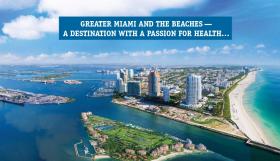
This page comes from a medical tourism brochure put out by the Greater Miami Convention & Visitors Bureau. Credit MiamiHealthcare.org

This page comes from a medical tourism brochure put out by the Greater Miami Convention & Visitors Bureau.
Credit MiamiHealthcare.org

Sen. Aaron Bean (R-Fernandina Beach) proposes setting aside $5 million dollars per year for marketing healthcare destinations. The money, to be administered through tourism promotion agency VISIT Florida, would depend on matching funds from local development councils or chambers of commerce. Greater Miami Convention and Visitors Bureau Executive Vice President Rolando Aedo says his group would be “ecstatic” to participate in such a partnership.

“As you look at the western hemisphere and South America and the Caribbean, we are very culturally in tune with those communities, so it does make it very easy and very comfortable for those families that do have to undergo medical procedures to come to Miami,” he says.

Aedo says medical tourism has long been part of Miami’s DNA—a message already being broadcast in promotional materials. He says the chance to double the marketing investment with state funding is exciting.

source: http://www.news.wfsu.org / Wfsu.org / Home> State News / by Jessica Palombo / Monday – March 17th, 2014

Pure Canadian Beef Partners with Canadian Medical Tourism Company, Medaway Health

Edmonton, Alberta Canada (PRWEB) March 15, 2014

Pure Canadian Beef inc. announced today that it has partnered with Canadian medical tourism company Medaway Health to jointly promote all natural foods direct to consumers. Canadian Pure Beef Inc. is a Canadian company that works with other local cow/calf producers to market and promote natural farm raised beef with no added hormones for the domestic market.

Medaway Health is a Canadian medical tourism company that provides affordable, high-quality healthcare facilitation and support for many choosing to travel to international destinations to seek medical treatment.

With a rapidly aging population, and rising healthcare costs a majority of our clients are trying to make “healthy choices” when it comes to their health. say Rachel Rowling, Executive Director, Medaway Health. “Prevention is the key to long-term health and this partnership exemplifies joint efforts to further develop in these areas”

Medaway Health will promote Pure Beef through its on-line store and through its franchises and dealerships, with additional focus on healthy preservation and maintenance.

Read the full story at http://www.prweb.com/releases/2014/03/prweb11652340.htm

source: http://www.digitaljournal.com / Digital Journal / Home> Press Release / PRWeb.com> NewsWire / Edmonton – Alberta, Canada / March 15th, 2014

Gallery

Inaugural Global Wellness Tourism Congress roundtable event to be held in London

This gallery contains 1 photos.

The first of three Global Wellness Tourism Congress (GWTC) roundtable discussions scheduled for 2014 will be held in London on April 1. Taking place at The Dorchester hotel, the event will gather representatives from the international travel and tourism industry … Continue reading →

A Visit To Taj With A Bypass Surgery Thrown In

Medical tourism is a booming phenomenon in countries like India, Malaysia, Mexico, Israel, Singapore among others. This sector has shown immense potential in the last few years, and has been hailed as the biggest revenue raking factor for any country that is willing to relax its rules and policies making things easier for those who are visiting a country as a tourist who wants to fix a thing or two in his/her body.

Namaste India
With all its cultural contradictions, what makes an ancient country India a hot destination for medical tourists? It’s booming education sector, which produces doctors who are never in scarce, and the surge of multi-specialty hospitals which have the best of equipments, and of course India’s own pharma sector is ever expanding. Compared to west (especially the UK and USA) costs in India are never a prohibitive for someone who has to undergo a major surgery. An unlikely aspect which needs further regulation is that of donors, who are never in short supply. No waiting period makes things easier for an American or a European choose India over other countries.

And then for those in search of alternate medicines, India is a land of indigenous knowledge on herbs, spices, oils and the combination of these curing a lot of ailments which according to modern medicine would require intervention. Now, it’s not a bad idea to find some real time solution for that bad back, or that skull-numbing migraine while sipping on tender coconut water the serene backwaters of Kerala, with Yoga regimes thrown in, isn’t it?

Medical tourism in India has different shades to it. While considering modern medicine alone, given the fact that most people would rush to India in time for a surgery, the costs are to be taken into account. No matter how ‘courteous’ US has been with its healthcare bill, making health accessible to majority of the people in the US, the costs in India are still much cheaper. And the post-surgery care with medicines, just as good! Because, India has been increasingly adhering to international quality standards with ISO certification and regular auditing of the systems and medical records in hospitals suiting all budgets.
So, it’s a no surprise that the foreign tourists who choose India for orthopedic and cardiac surgeries rave about its seven star facilities in hospitals. The country has been surely putting its growing population to good use by training them in medical and paramedical jobs, with no dearth of caregivers in its hospitals.

How Big Can it Get?
The rising popularity of India turning into a hot medical tourism destination, with an average stay of a patient/tourist being 30 days and above, is in the statistics. According to Confederation of Indian Industries, 150,000 medical tourists visited India in 2005. This was despite little or no marketing efforts from the Indian government and hospitals. It was a purely driven by person-to-person recommendation of a particular hospital or facilities.

In 2008, the numbers had grown steadily, touching a 200,000 milestone of those many people having visited India for various surgeries. Soon, Associated Chambers of Commerce and Industry of India (ASSOCHAM) began to collate the data and declared 850,000 medical tourists had visited the country in 2011. Anticipation is that the numbers may well touch 3,200,000 by 2015. Majority of these tourists came to Indian shores seeking liver transplant, heart surgeries like bypass or pacemaker, bone marrow transplant, hip replacement, knee replacement, eye surgeries, etc. Indian expertise in conducting these surgeries with most advanced technology is at par or sometimes even beyond comparison with its American or European counterparts.

Business is not all that it matters for India as far as medical tourism is concerned. The country on one hand is tapping its potential for being a health destination among developed nations. And on the other, it is also using it for establishing values such as secularism too. Pediatric patients in need of good medical attention and their families cross borders of Pakistan and Afghanistan regularly, to be treated with equal amount of love, care and affection in Indian hospitals. Years ago, a Bangalore based hospital made headlines for treating a young Pakistani girl, and built quite a few bridges across hearts in both the countries.

The biggest beneficiary from all this is the average US/UK citizen who wants a surgery done within his affordability because in his own country, it would cost at least ten times more. While total addressable global health tourism is pitted at $150 billion, India so far has been able to access only about a billion or so. But these numbers are surely expected to grow in the coming days as the medical tourism is expected to grow at 30% annually till 2015. Beyond that, it will take sustained efforts and better marketing strategies for India to remain on the global health tourism market.

Image: Thinkstock

source: http://www.businessinsider.in / Business Insider India / Home> Destination / by Preetam Kaushik / March 14th, 2014